Our classroom · Ages 2–6
A classroom that nurtures independent minds.
One bright, prepared room in Edmonds, built at a child’s height so children can choose their work and finish it on their own.
at a child’s eye level
The prepared environment
A room that says help me do it myself.
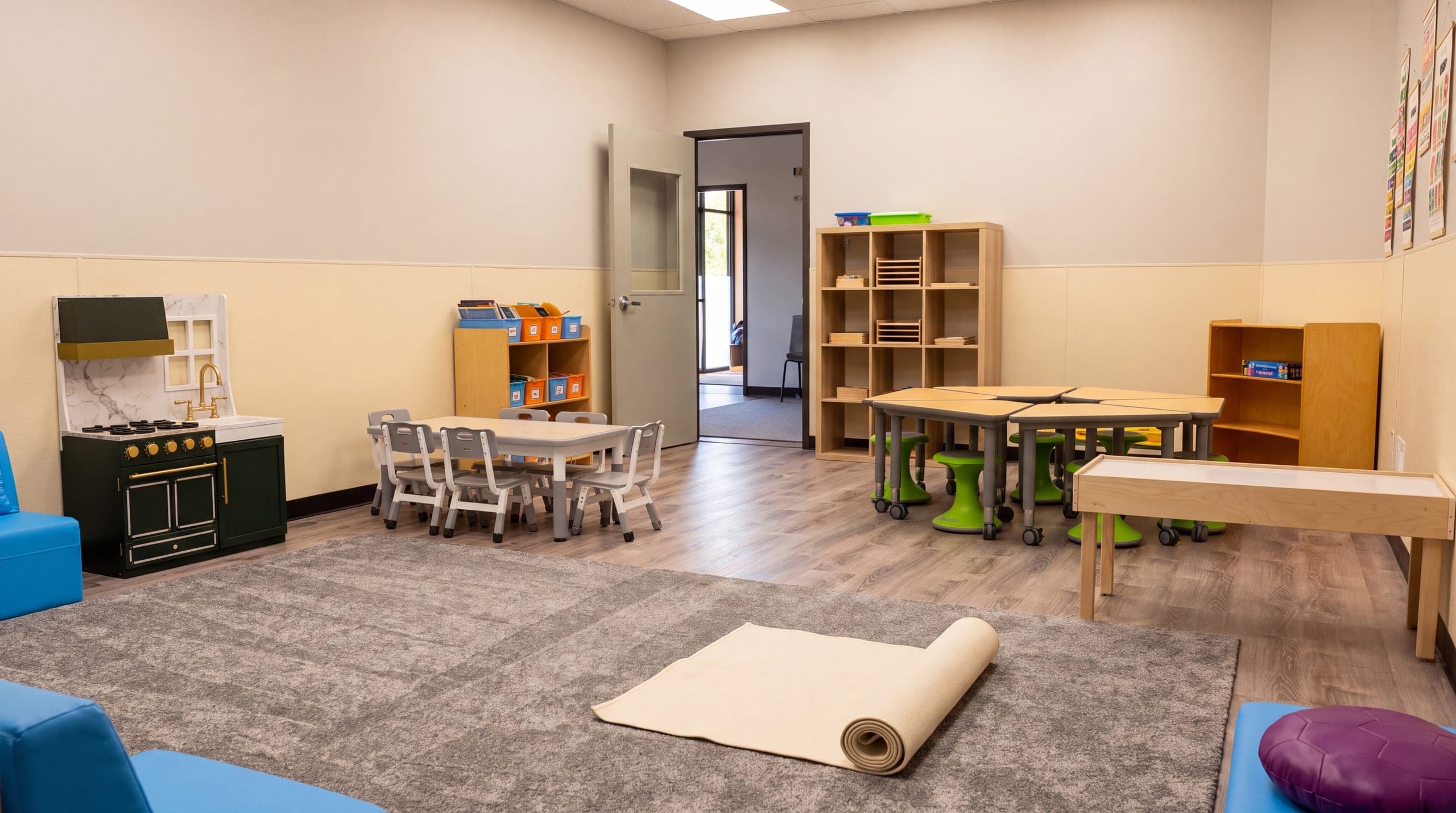
Montessori teachers call it the prepared environment: a classroom arranged so children can help themselves. Low open shelves, real tools and materials set out in sequence let a young child choose work and finish it without waiting for an adult.
Our Edmonds classroom is built this way for children ages 2 to 6. Independence is designed into the room itself, and children learn at their own pace.
The GKA classroom
What every schedule shares.
A mixed-age 2–6 classroom
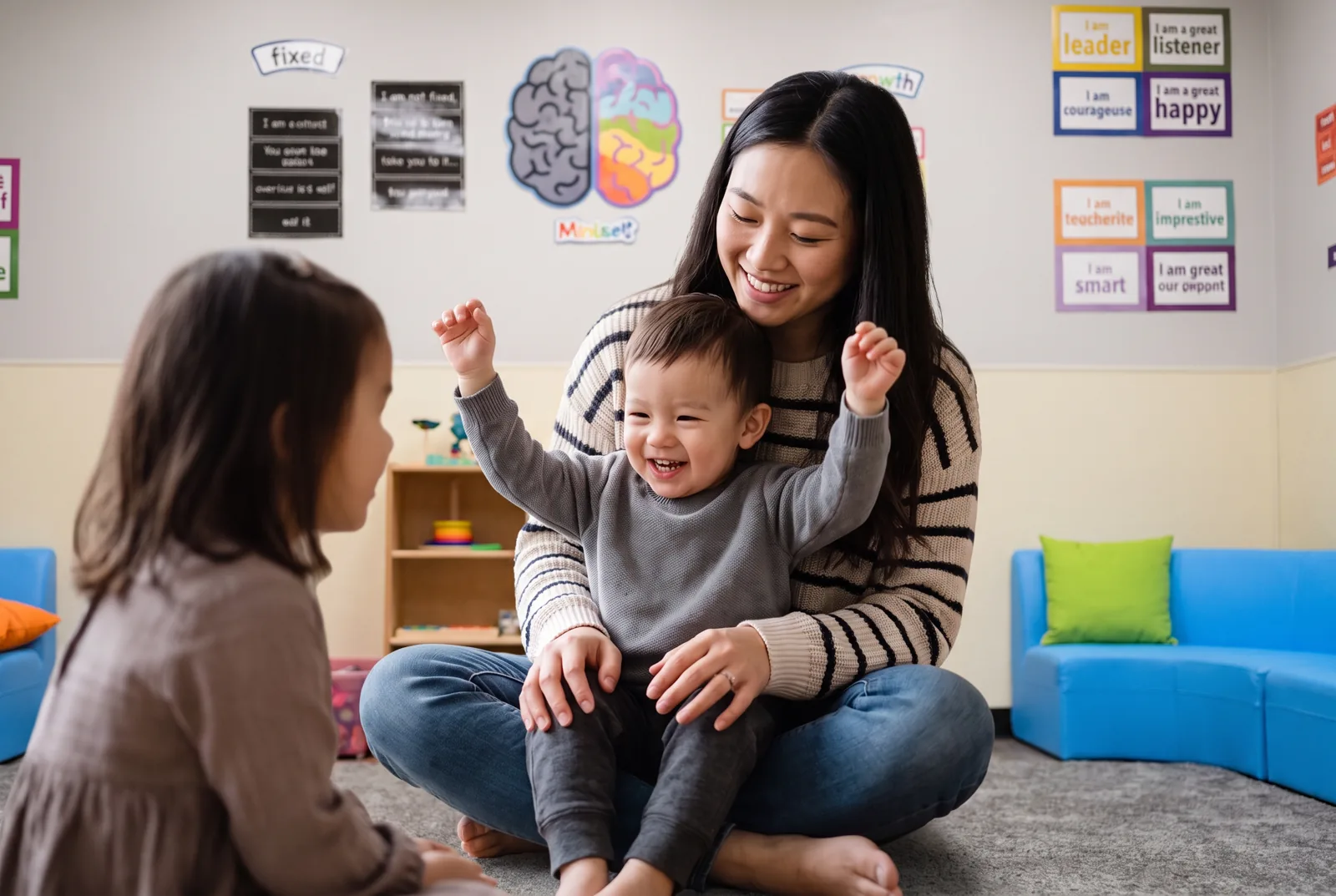
Younger children watch and copy the older ones. Older children learn by helping. One community from age 2 to age 6.Trained Montessori guides
Lessons are presented one child at a time, so your child moves through the materials at their own pace.Uninterrupted work cycles
Long stretches of self-chosen work, so concentration has time to build.
Our classroom
Built at your child’s height.
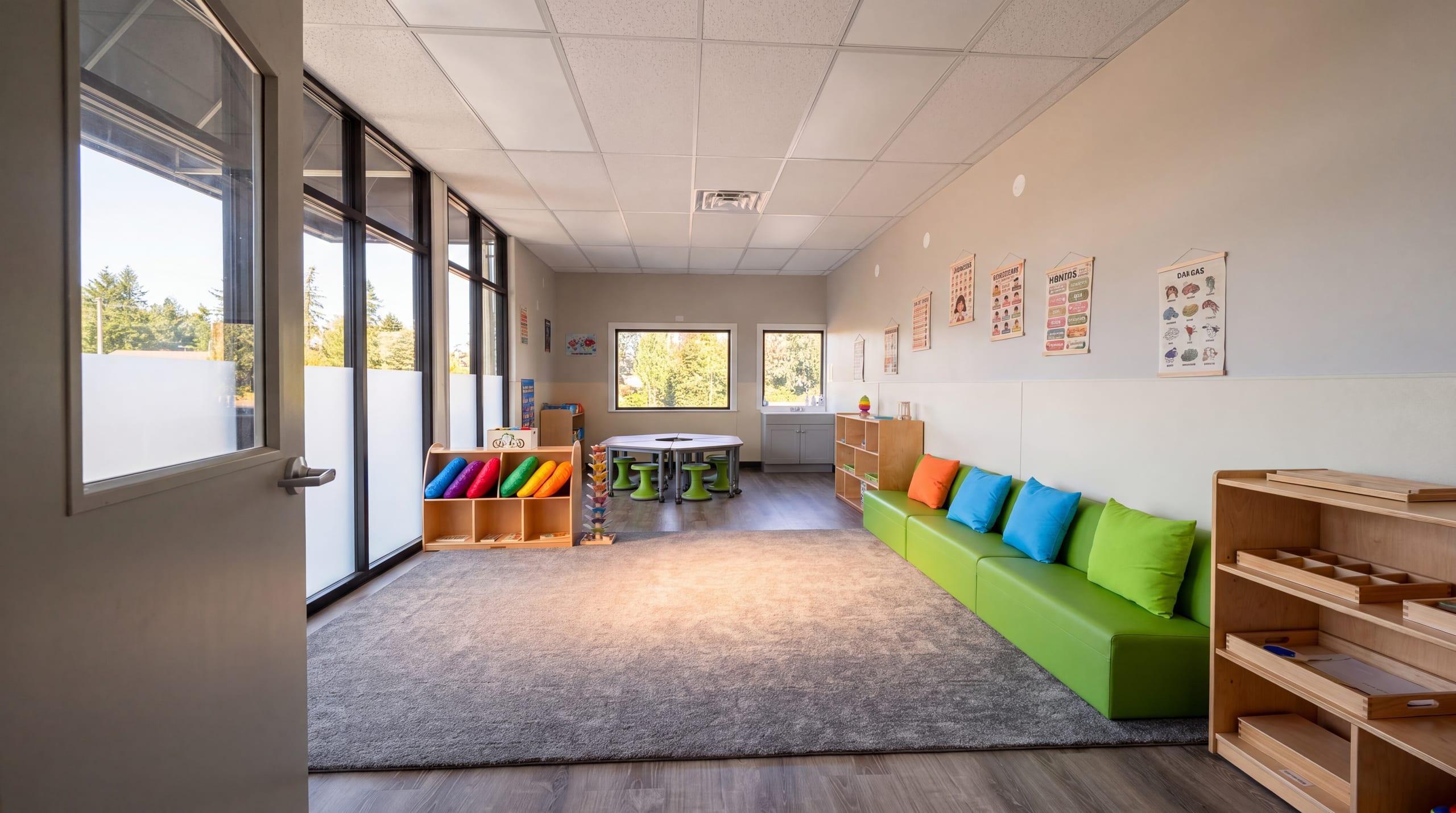
The first thing you notice is the scale: child-height tables and chairs, low open shelves, and hooks and trays a young child can reach without asking. Children work at a table or on a floor mat, alone or beside a friend.
Every shelf holds real Montessori materials, set out left to right in the order children meet them: practical life, sensorial work, language, math and cultural studies.
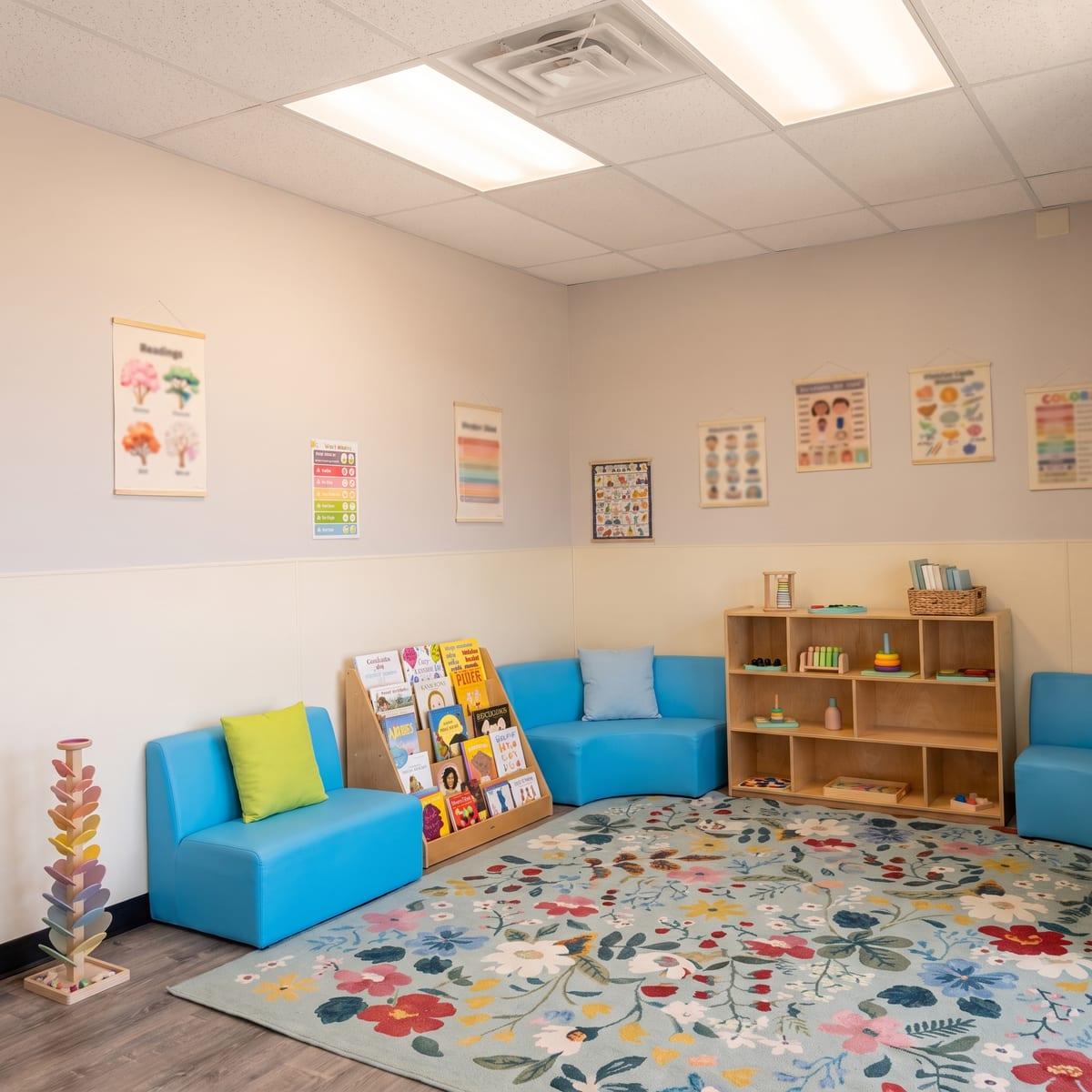
Reading nook 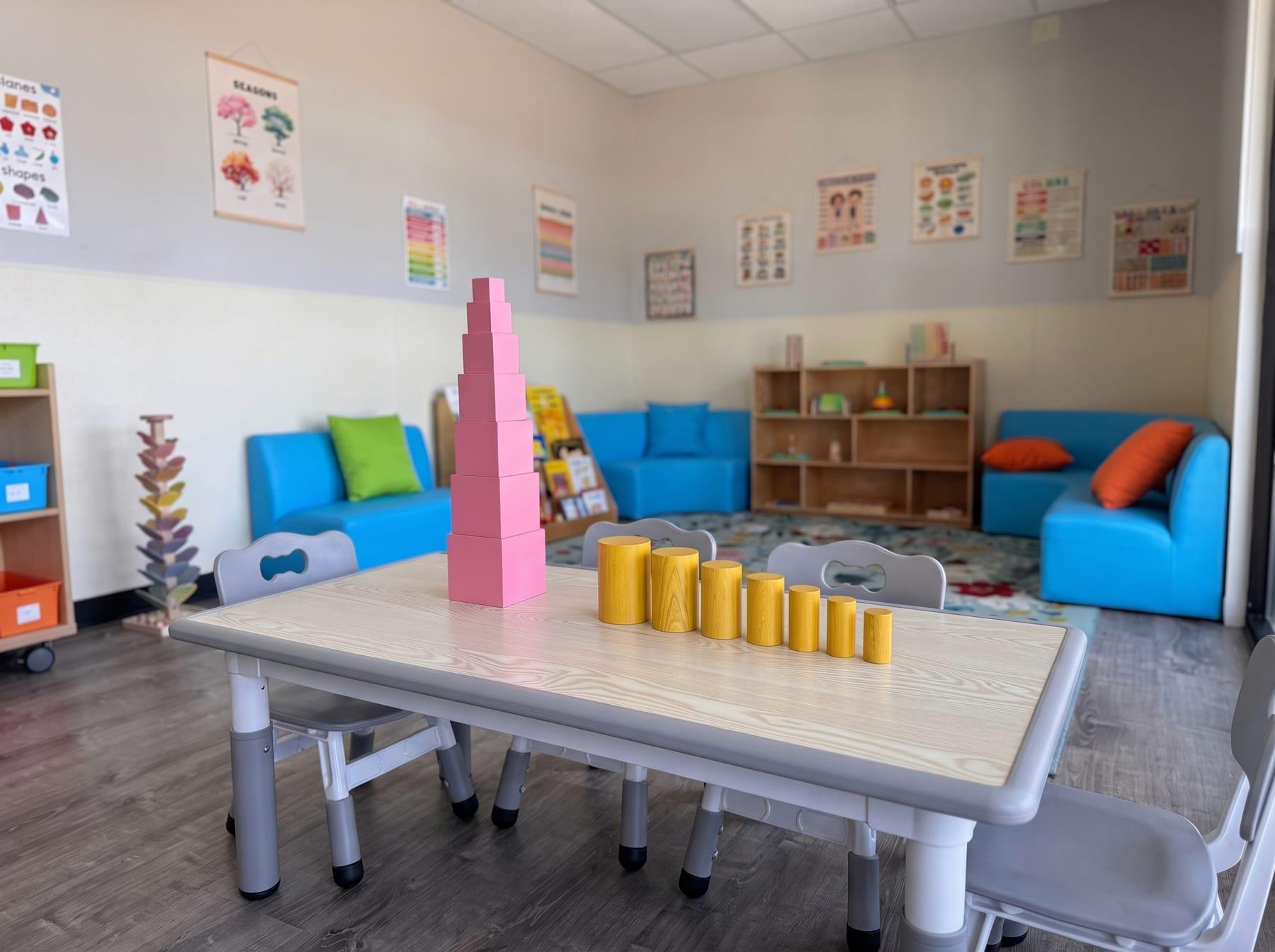
Sensorial materials 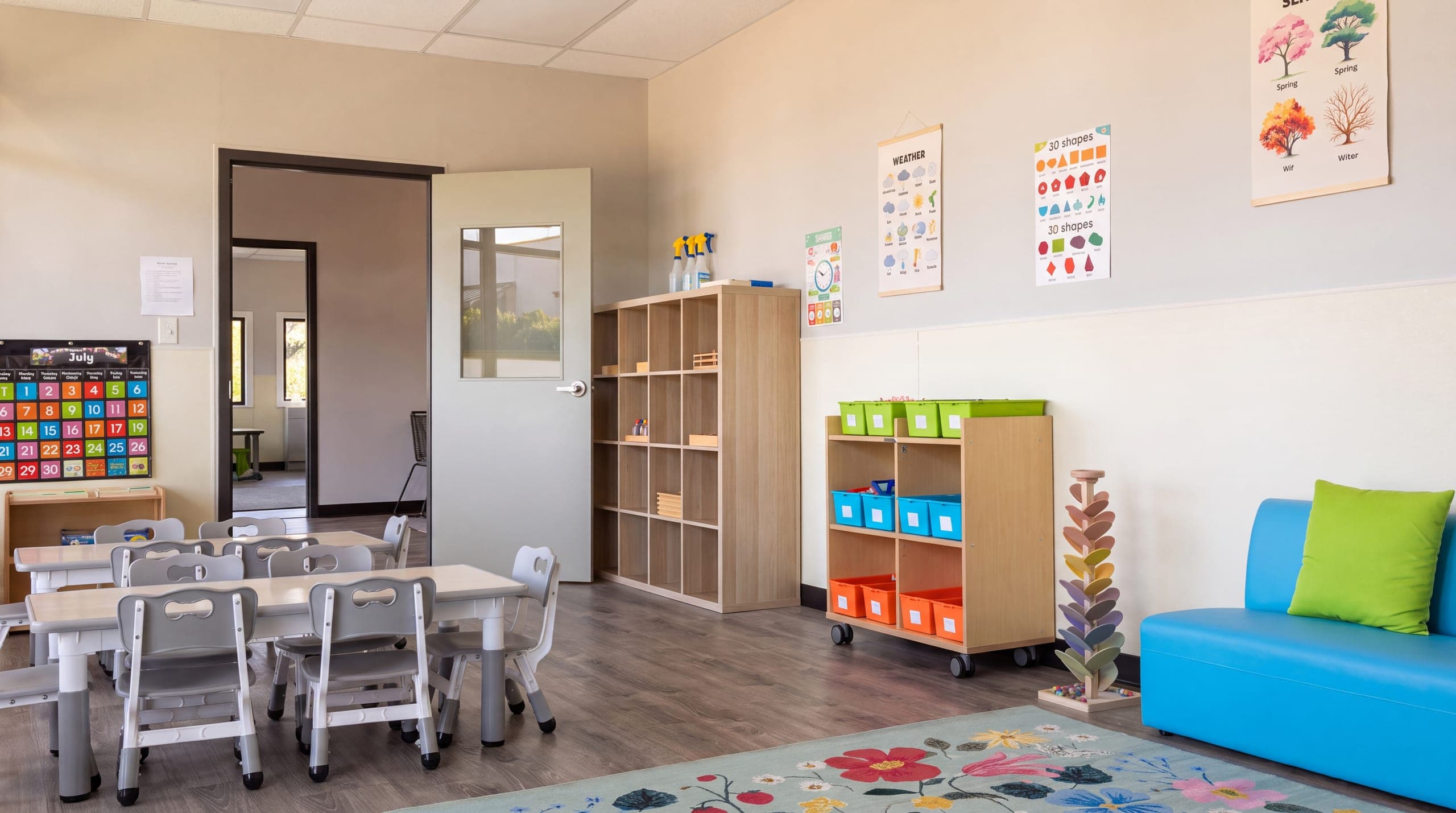
Ready for a tour 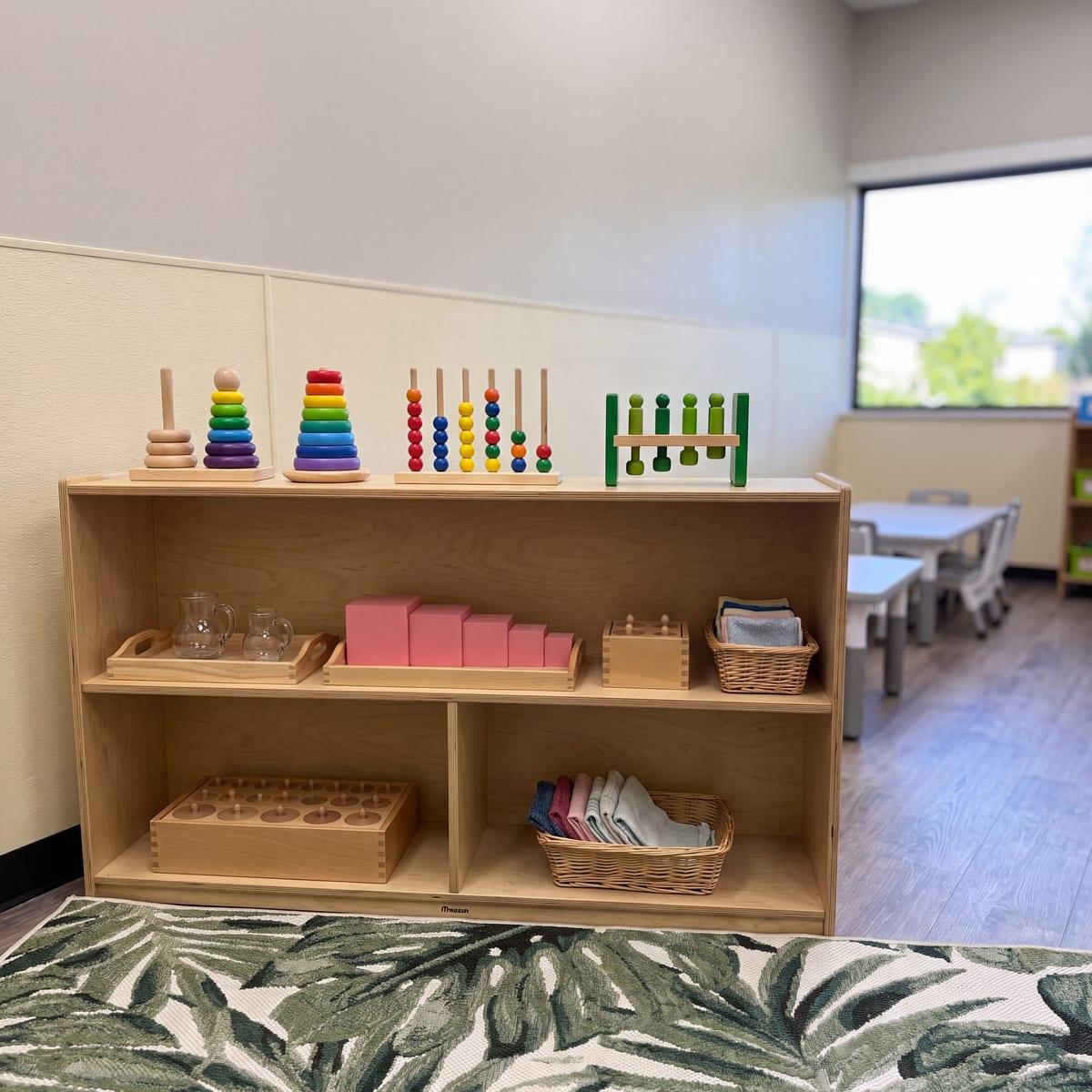
Trays in sequence 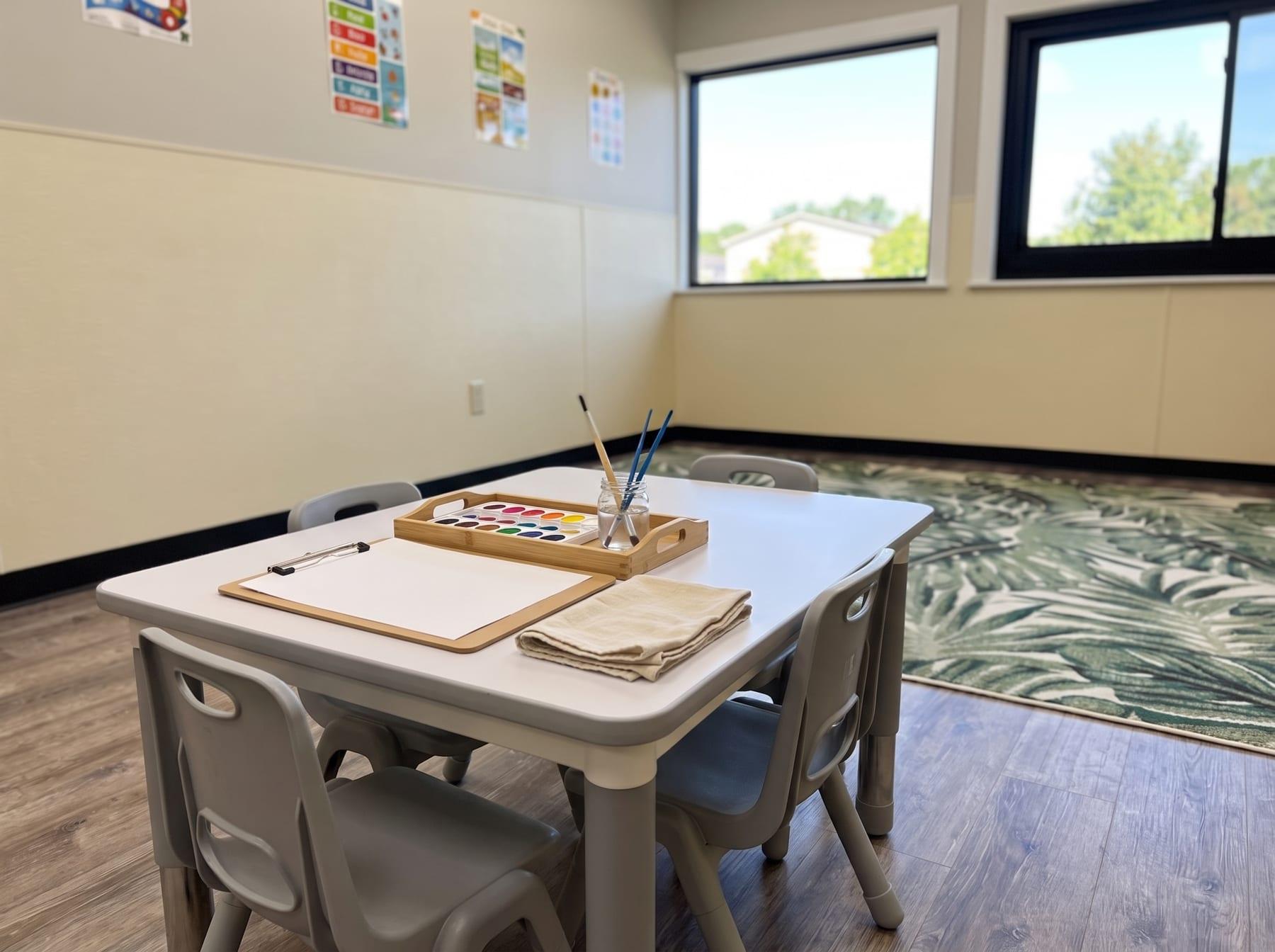
Art tray 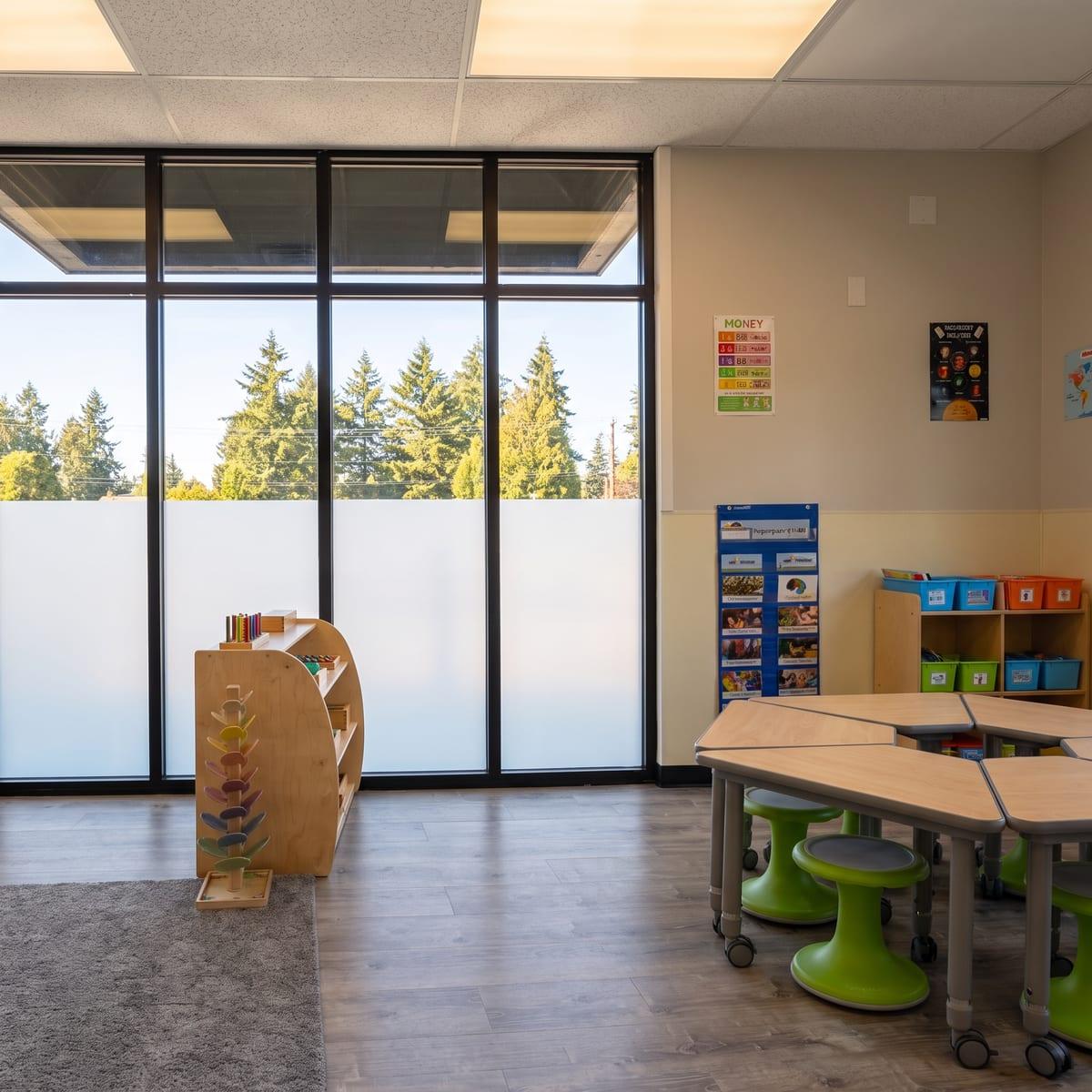
Evergreens outside
Why it works
Six things about the room.
Child-led learning
Materials are arranged so children can choose their own work and stay with it as long as they like.Order and calm
Everything has a place. Tidy, uncluttered shelves make it easier to focus and finish what you start.Mixed-age community
Two- to six-year-olds share one classroom, so patience and helping are practiced every day.Quality materials
Hands-on Montessori materials that teach one idea at a time, made to be handled.Child-scale spaces
Tables, chairs and shelves at your child’s height, so independence is built into the room itself.Hands-on work
From pouring and buttoning to counting beads, children learn by doing real things with real objects.
Time outside
Fresh air is part of the curriculum.
Children go outside to run, dig, balance and look closely at things. We treat that time as part of the curriculum, with the same calm and order as the classroom.
Gardening and nature observation belong to our cultural studies work, and group games are practice in grace and courtesy: taking turns, inviting a friend in, and waiting.
- Time outside, with gear for gray Pacific Northwest skies
- Gardening and nature observation, straight from cultural studies
- Room to run, climb, balance and build
- Group games that practice grace and courtesy
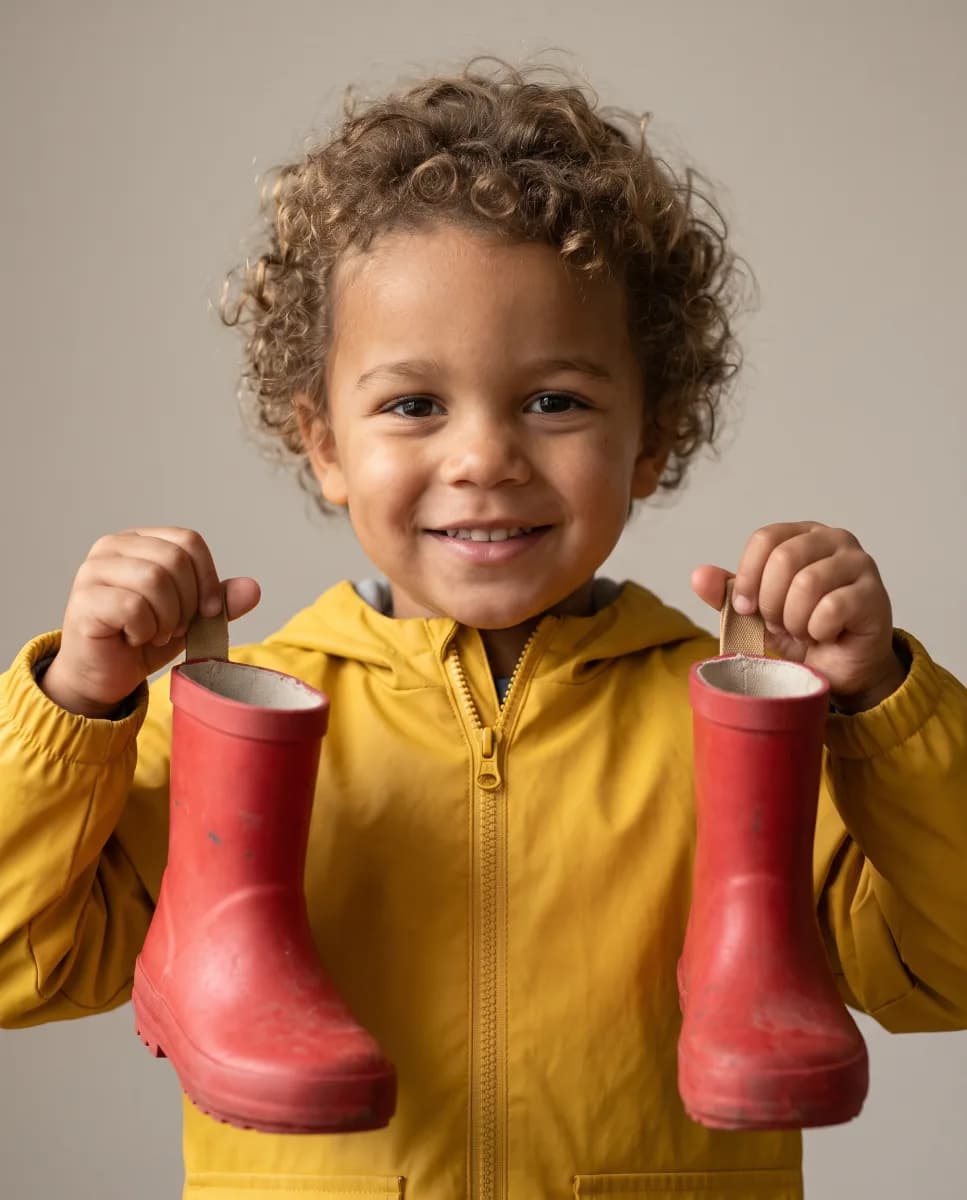
The child who concentrates is immensely happy.
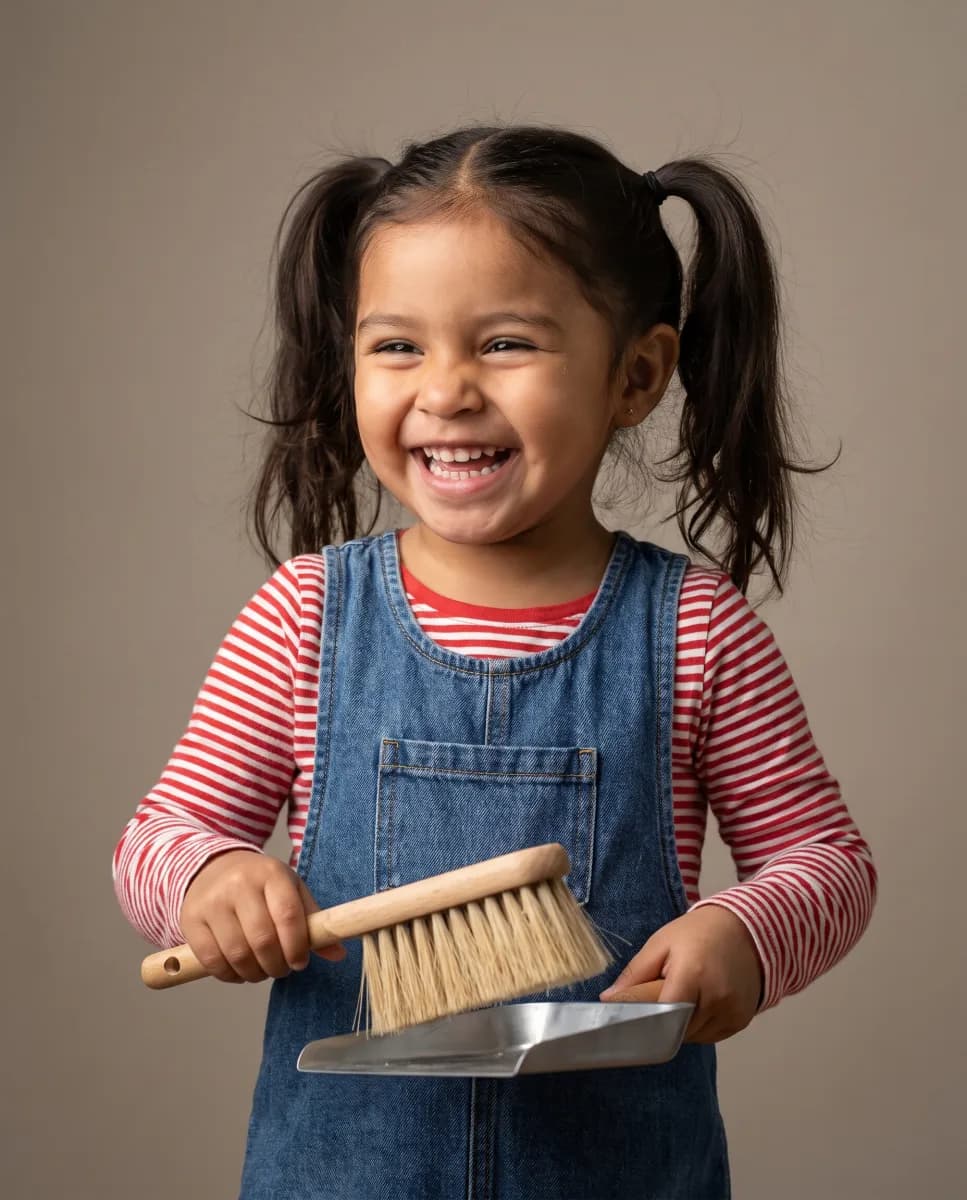
care of the classroom
Day to day
Rainy days are working days.
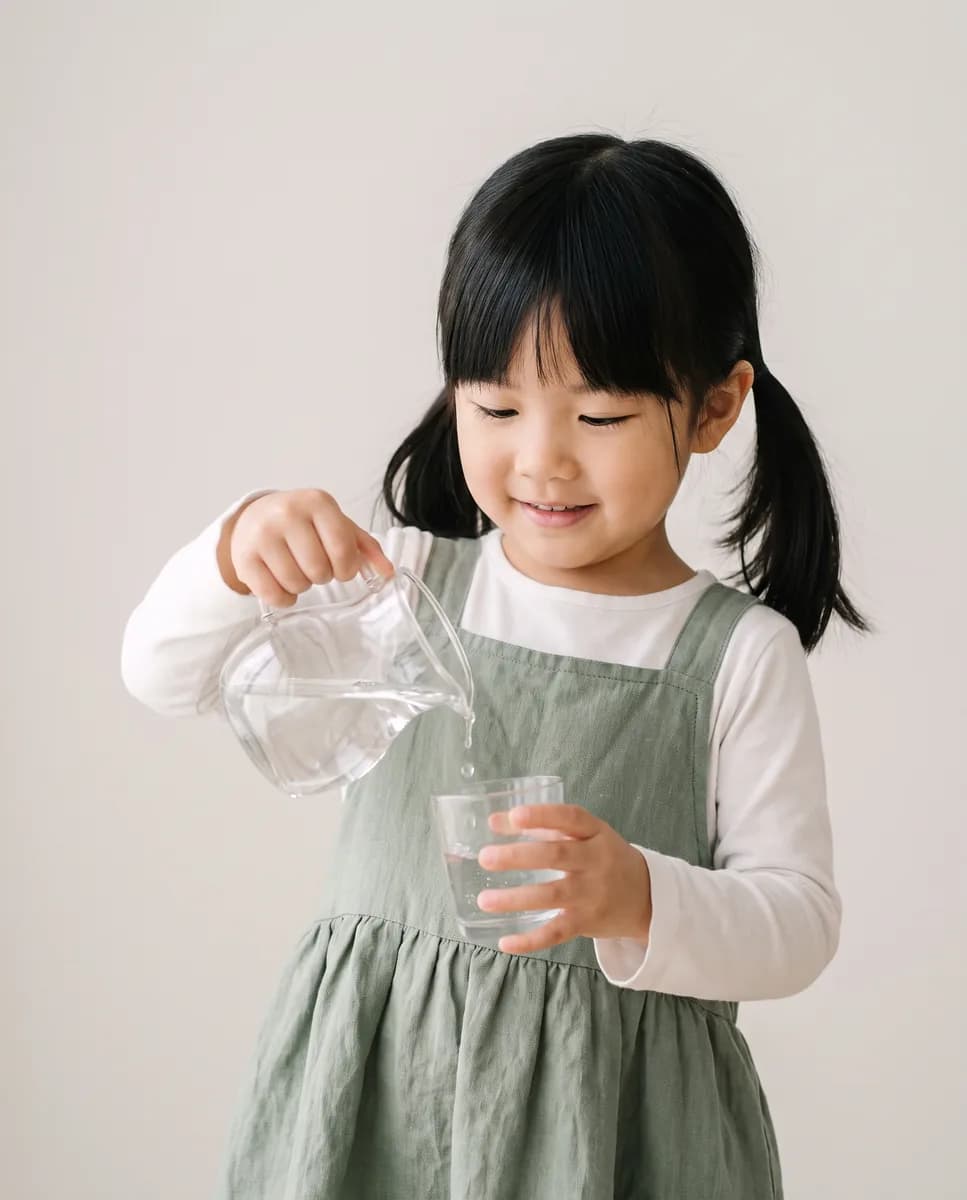
When the Edmonds sky turns gray, the rhythm of the day does not change. Children keep moving and keep working indoors: pouring, food preparation, care of the classroom and movement games. Practical life, Montessori’s name for real everyday work, is often the rainy-day favorite.
Come see the classroom.
Full-time (8:00 AM – 5:00 PM) and half-day schedules for ages 2 to 6, every rate published before you visit. A private 30-minute tour with the director.